The phrase “China Plus One” has evolved from a supply chain buzzword to a fundamental reality, and nowhere is this more visible than in Vietnam. Following the escalation of trade tensions, particularly the US-China tariff wars, and reinforced by the global supply chain disruptions of recent years, a dramatic manufacturing exodus has taken shape. Multinational corporations are diversifying their production bases, and Vietnam has unequivocally become the primary beneficiary.
But this isn’t just a happy accident of geography and low labor costs. To absorb this seismic shift, which includes major players in high-value sectors like electronics, machinery, and textiles-Vietnam’s government has embarked on an aggressive, multi-billion-dollar mission to completely overhaul its national infrastructure. This massive investment is the essential, often-unseen foundation supporting the country’s rise as the next global manufacturing powerhouse.
The Great Leap Forward: Connecting the Nation
The sudden surge in Foreign Direct Investment (FDI) has exposed capacity constraints, particularly in logistics. The solution is an ambitious series of national projects focused on three core areas: road, rail, and port connectivity.
- Highways and Expressways: Recognizing that a vast majority of freight moves by road, the government is dramatically expanding its expressway network. Key projects include the ongoing construction of the North-South Expressway, which will link the major economic hubs of Hanoi and Ho Chi Minh City, drastically cutting transit times for goods flowing between the industrial North and the commercial South. This improved connectivity is vital for manufacturers who need to move components and finished goods efficiently.
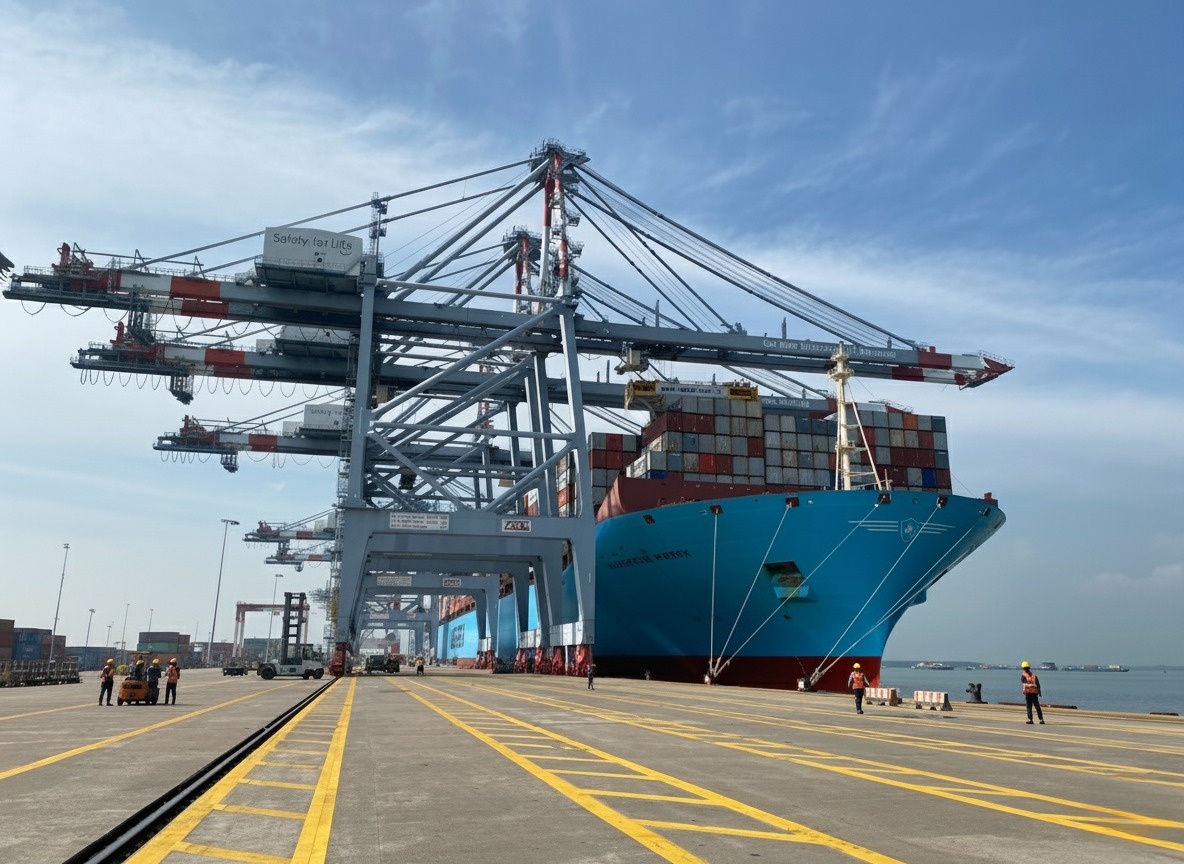
- Seaport Expansion: As an export-oriented economy, Vietnam’s ports are the most critical link in the global supply chain. The country’s port system has been undergoing a massive upgrade to accommodate the world’s largest container vessels.
- Energy and Digital Infrastructure: Beyond transport, significant investment is being poured into securing a stable, modern power grid (with a major focus on renewables under the Power Development Plan VIII) and expanding digital infrastructure, including high-tech R&D centers focused on AI and semiconductors. These moves are critical for attracting high-value manufacturing that requires reliable power and sophisticated connectivity.
The Crown Jewel of the South: Cai Mep International Port
The most compelling example of this strategic infrastructure development is the Cai Mep-Thi Vai port complex in the Ba Ria-Vung Tau province, just southeast of Ho Chi Minh City.
For years, the nearby Cat Lai port (part of the Ho Chi Minh City port cluster) faced severe congestion, a major bottleneck for the booming Southern Key Economic Zone. Cai Mep was designed as the solution, a true deep-water port capable of handling megamax container ships (vessels of over 200,000 DWT) that ply the direct, long-haul routes to Europe and the United States.
Cai Mep International Port (CMIT) is a game-changer for manufacturers relocating to Vietnam for two main reasons:
- Direct International Access: It bypasses the need for transshipment in other regional hubs like Singapore or Hong Kong. This direct service saves both time and cost, a major incentive for high-volume exporters targeting Western markets.
- A Catalyst for Investment: The port’s sheer capacity and modern operation have immediately attracted industrial and logistics investors to the surrounding region. It has transformed the southern corridor into a highly desirable industrial hub, easing pressure on Ho Chi Minh City and providing a world-class logistics gateway for the influx of new factories.
A New Chapter for Global Manufacturing
Vietnam’s infrastructure drive is not just about keeping pace with demand; it’s a statement of intent. The proactive government policies, including business-friendly tax incentives and key trade agreements, have established a robust framework for investment. But without the roads, the power, and the ports like Cai Mep to physically move the millions of manufactured goods, the shift would stall.
The country is no longer merely a low-cost alternative. By aggressively investing in world-class logistics and transport networks, Vietnam is cementing its role as a stable, efficient, and technologically prepared global manufacturing hub for the decades to come. For companies seeking resilience and growth beyond legacy supply chains, Vietnam’s infrastructure story is the most exciting development in global trade today.
Check our website to find out how your business can benefit. www.aitextilehub.com